
Diversified lending gives accredited investors a way to participate in real estate-backed income without relying on a single property, single borrower, or single deal outcome.
At SPG Capital, investor capital is deployed across a portfolio of short-term, first-position real estate loans secured by residential properties in Pennsylvania, Delaware, and New Jersey.
Key Takeaways
Diversification happens at the loan level: multiple properties, borrowers, timelines, and submarkets.
Collateral-backed structure: loans are secured by real property, with a first-position claim.
Income-focused design: monthly distributions supported by a pool of loans rather than one exit event.
What Diversified Lending Means for Investors
Diversified lending means capital is allocated across more than one loan. Instead of tying an investor's outcome to a single project, the fund spreads exposure across different properties, borrowers, timelines, and local submarkets.
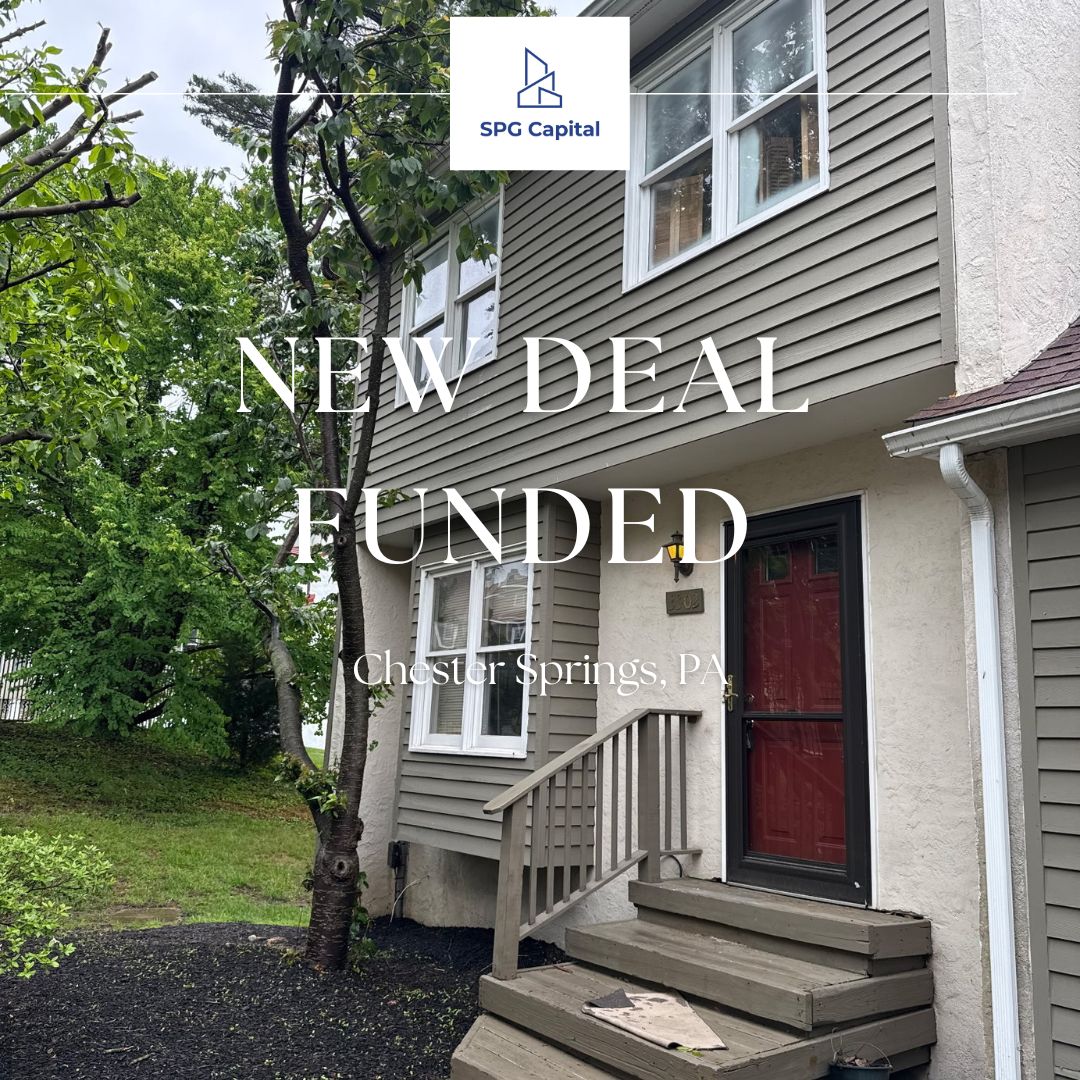
In private real estate debt, this matters because every individual loan has its own variables. One property may be a light renovation in Delaware. Another may be a residential project in Chester County, Pennsylvania. Another may be a short-term loan on a property in Southern New Jersey.
A diversified real estate loan portfolio does not eliminate risk. No investment can do that. But it can reduce single-deal concentration risk—the risk of having too much capital dependent on one asset or one borrower.
That is the core value of SPG Capital's model. Investors gain exposure to a managed pool of collateral-backed real estate loans rather than trying to evaluate, fund, and monitor individual loans on their own.
Why Portfolio Diversification Matters in Real Estate Debt
Portfolio diversification is one of the most practical risk-management tools available to an investor. The concept is simple: you do not want one decision, one property, or one person to carry too much weight inside your portfolio.
Many accredited investors already think this way with stocks, bonds, and retirement accounts. They avoid overconcentration in one company or one sector. The same principle applies to private real estate debt.
With SPG Capital, diversification happens inside the fund at the loan level. Investor capital is spread across multiple short-term loans secured by real property. Each loan has its own collateral, its own scope, and its own repayment timeline.
This creates a different experience than owning a single rental property or funding a single private note. Instead of having all of your real estate exposure tied to one outcome, you participate in a broader lending strategy managed by operators who know the local market.
“SPG Capital's internal scorecard is simple: not one monthly payment to investors has been missed in the fund's operating history.”
The SPG Approach
How SPG Capital Builds Diversified Real Estate Loan Portfolios
SPG Capital focuses on short-term, first-position real estate debt. First position means the loan has priority claim on the property collateral if something goes wrong. Collateral means the real estate itself supports the loan.
The fund does not chase every opportunity. SPG Capital works with a tight circle of experienced, repeat borrowers it knows and trusts. That selectivity is a key part of the underwriting process.
The team looks for practical projects with clear budgets, realistic timelines, and strong demand in local neighborhoods. These are residential properties in communities across Pennsylvania, Delaware, and New Jersey.
This local focus helps SPG Capital understand the assets behind the loans. The team is not reviewing deals from thousands of miles away. Josh Wollaston and Alex Martyn built the fund around real operator experience and a hands-on understanding of the markets where capital is deployed.
That matters for diversified lending. A broad portfolio only helps if the individual loans are carefully selected. Diversification should never be an excuse to lower underwriting standards.
9%
Preferred Return · 1-Year Commitment
10%
Preferred Return · 2-Year Commitment
15th
Monthly Distributions Paid
The Difference Between Diversification and Dilution
Not all diversification is useful. Spreading capital across weak deals does not create a stronger portfolio—it simply spreads exposure across more weak points.
SPG Capital's approach is disciplined diversification, not volume for its own sake. Every loan still needs to make sense on its own.
The team asks practical questions:
- Is the borrower experienced?
- Is the scope clear?
- Is the budget realistic?
- Is there enough collateral support?
- Does the local market support the exit plan?
This is one reason private real estate debt can be attractive for accredited investors: the investment thesis is based on real property, real repayment sources, and real underwriting—not public-market sentiment.
“We don’t chase yield by taking on more risk. We protect capital first — returns follow from discipline, not speculation.”
SPG Capital Investment Philosophy
How Diversified Lending Supports Monthly Income
Many investors come to SPG Capital because they want steadier cash flow. The fund offers a 9% preferred return for a 1-year commitment and a 10% preferred return for a 2-year commitment, paid monthly.
A preferred return means investors receive their stated return before the fund manager participates in additional economics. It creates a clear income structure that is easy to understand.
SPG Capital pays investors on the 15th of each month. The goal is consistent, on-time distributions supported by a pool of performing real estate loans—rather than waiting on one property sale or one borrower payoff to drive the entire investor experience.
25%+
Retirement Accounts
For retirement-focused investors, this can be especially meaningful. The fund accepts capital from Self-Directed IRAs and SEP IRAs, and more than 25% of current investors use retirement accounts to invest.
Why This Appeals to Accredited Investors
Accredited investors often have access to more choices, but more choices do not always make decisions easier. Public equities can be volatile. Bonds may not provide the income level some investors want. Rental properties can create work, liability, and management stress.
Diversified lending through a private real estate debt fund sits in a different lane:
Real estate exposure without active ownership
Income-focused structure without relying on stock market appreciation
Collateral-backed loans instead of unsecured promises
SPG Capital is open to accredited investors only, with a $100K minimum and a 1- to 2-year commitment.
The SPG Capital Track Record
SPG Capital reports it has deployed $17.5M, funded 95 deals in 2025, maintained a 0% default rate, and paid approximately $500,000 to investors in 2025 alone.
Track Record
$17.5M
Deployed
95
Deals Funded in 2025
0%
Default Rate
~$500K
Paid to Investors in 2025
Those numbers reflect the operating discipline behind the fund. The team is focused on a region it knows, a borrower base it trusts, and a lending model it can manage closely.
The fund's diversified loan portfolio is central to that approach. Capital is spread across multiple loans, multiple borrowers, and multiple property types simultaneously—helping reduce the impact of any single loan inside the broader portfolio.
Accredited Investors
Ready to Explore Diversified Real Estate Income?
Risks and Considerations
Important to Know
Illiquidity: investor capital is typically committed for 1–2 years.
Real estate and credit risk: collateral value, market conditions, and borrower execution can impact outcomes.
No guarantee: diversification can reduce concentration risk, but it does not eliminate risk or guarantee returns.
Is Diversified Lending Right for Your Portfolio?
Diversified lending may be a fit if you are an accredited investor looking for a more tangible income strategy—and if you want real estate exposure without buying, managing, renovating, or selling properties yourself.
The right investor understands that private real estate debt is still an investment. It requires patience, accreditation, and a commitment period. It also requires trust in the people managing the capital.
That is why SPG Capital keeps the model straightforward: short-term real estate loans, first-position collateral, experienced borrowers, monthly distributions, local assets, and a clear preferred return.
QUESTIONS? We Have Answers.
Frequently Asked Questions
Diversified lending in real estate means capital is spread across multiple real estate loans instead of being tied to one property or one borrower. For investors, this can help reduce single-deal concentration risk while still providing exposure to collateral-backed real estate debt.
Portfolio diversification in a real estate debt fund happens when the fund invests across multiple loans, borrowers, property types, and local markets. SPG Capital uses this approach while focusing on first-position loans secured by residential real estate in Pennsylvania, Delaware, and New Jersey.
No. Diversification does not eliminate risk. It helps manage risk by reducing dependence on one asset or one borrower. SPG Capital also manages risk through collateral-backed loans, local underwriting, experienced repeat borrowers, and first-position mortgage security.
SPG Capital pays investors monthly on the 15th. Investors earn a 9% preferred return for a 1-year commitment or a 10% preferred return for a 2-year commitment, based on the fund's established structure.
SPG Capital is available to accredited investors only. The minimum investment is $100K, and investors typically choose a 1-year or 2-year commitment. The fund can also accept capital from Self-Directed IRAs and SEP IRAs.
Ready to evaluate?
Next Steps
Ready to see whether this strategy fits your portfolio? Visit the Investment Opportunities page or book a call with Josh or Alex to ask questions and learn how the fund works.

From W-2 to Private Lender: Josh Wollaston on Building Wealth Through Real Estate Lending
SPG Capital co-founder Josh Wollaston tells The Revamp Podcast how he went from a corporate banking job to 65 rental units and a private real estate lending fund.
Read More
New Deal Alert! We Were the Borrowers on This One…
Most private lenders will tell you they understand real estate. Fewer can show you a house they bought, renovated, and put back on the market themselves.
Read More
SPG Capital Investor Appreciation Event Recap
See highlights from the SPG Capital investor appreciation event and how our growing investor community continues to shape what we are building.
Read MoreNew Deal Alert | Townsend, DE 19734
Some deals look like opportunities from the start. This one…
Read More
Self-Directed IRAs: Your Retirement Account Can Do More.
About 20% of our $6.5M fund — roughly $1.3M —…
Read More
Quarterly Update | Q1 2026
📊 By The Numbers (Last Quarter): – $141,000 in monthly…
Read More