
Short-term real estate debt investing gives accredited investors a way to earn income from real estate without owning property, managing tenants, or waiting years for a project to exit. Instead of buying equity in a building, investors participate in a private real estate debt fund that deploys capital into short-term, collateral-backed loans.
At SPG Capital, loans are secured by first-position mortgages on residential properties in Pennsylvania, Delaware, and New Jersey. The goal is straightforward: monthly fixed income backed by real assets, repeat borrowers, and disciplined underwriting.
What Is Short-Term Real Estate Debt Investing?
Short-term real estate debt investing is a strategy where investor capital is used to fund real estate loans with shorter repayment timelines. These loans are typically secured by property collateral, meaning the real estate itself supports the loan.
For investors, the appeal is different from traditional real estate ownership:
You are not buying a rental house.
You are not managing repairs or tenants.
You are not relying on long-term appreciation to create value.
Instead, your capital is placed into real estate debt designed to generate income. At SPG Capital, investors receive a preferred return of 9% for a 1-year commitment or 10% for a 2-year commitment, paid monthly.
A preferred return means investors receive their stated return before the fund manager participates in additional economics. It creates a clear income structure that is easy to understand.
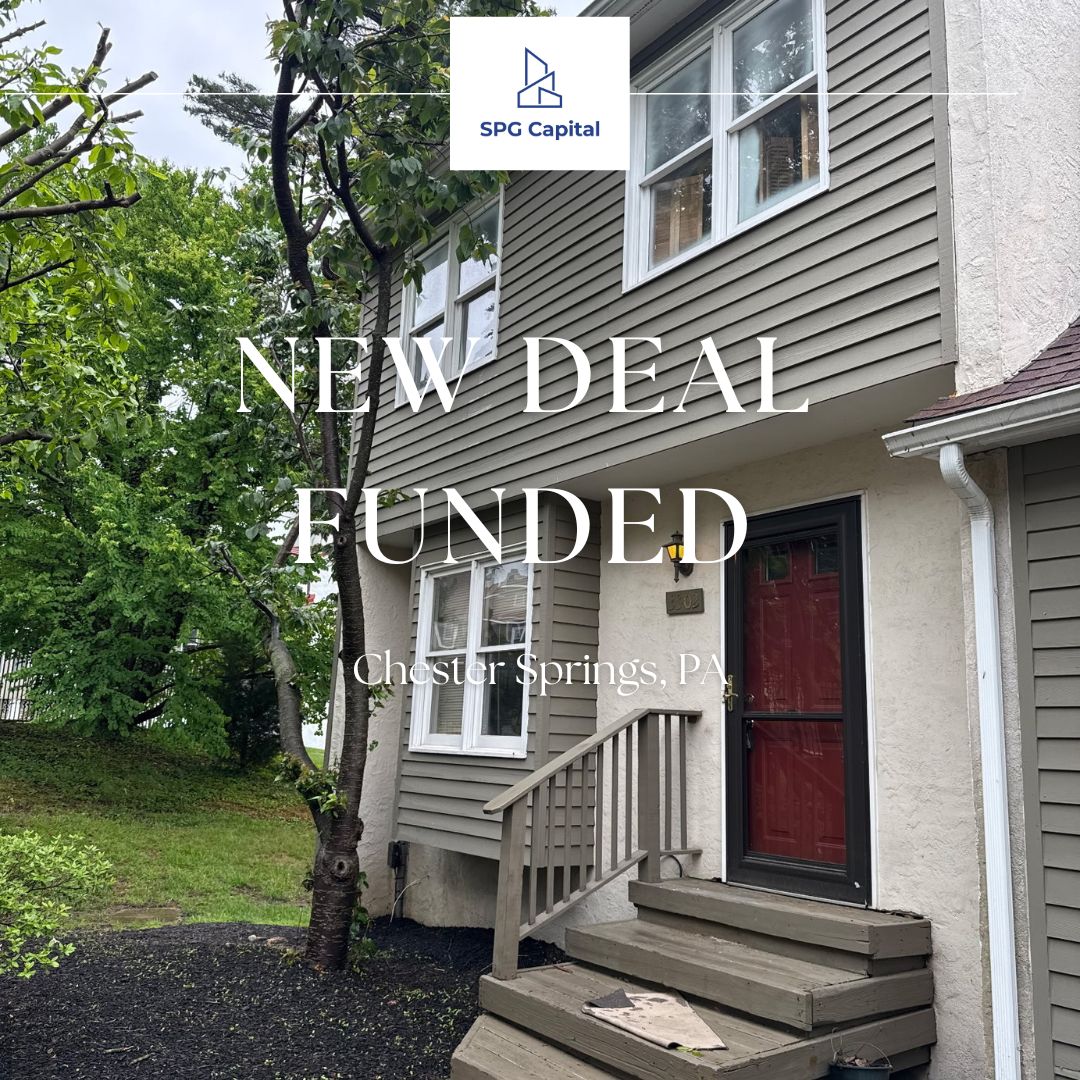
How Short-Term Real Estate Debt Works (In Plain English)
While every loan is different, the basic structure is familiar:
Borrower Identifies the Property
A borrower identifies a property (often a value-add residential project).
The Fund Underwrites the Deal
The fund underwrites the deal (property, budget, borrower, and exit plan).
The Fund Makes the Loan
The fund makes a collateral-backed loan secured by a mortgage on the property.
Borrower Executes the Plan
The borrower executes the plan (renovation, resale, refinance, or another defined repayment path).
Loan Is Repaid, Capital Redeployed
The loan is repaid and capital can be redeployed into additional short-term loans inside the fund.
SPG Capital still requires a 1 to 2 year investor commitment, depending on the return option selected. Inside the fund, capital is deployed across multiple short-term loans, supporting diversification while targeting monthly distributions.
“SPG Capital's internal scorecard is simple: not one monthly payment to investors has been missed in the fund's operating history.”
Why Shorter Loan Terms Can Appeal to Investors
Many real estate investments require long holding periods. Apartment syndications, development projects, and private equity real estate deals may tie up capital for several years. That can work for some investors, but it is not the right fit for everyone.
Short-term real estate debt investing offers a different profile. The loans are designed around shorter project timelines, often tied to renovation, resale, refinance, or another clear repayment path.
That shorter structure can make the investment feel more connected to real activity. Capital goes into a property-backed loan, the borrower completes the planned scope, and the loan is repaid through a defined exit strategy.
9%
Preferred Return · 1-Year Commitment
10%
Preferred Return · 2-Year Commitment
15th
Monthly Distributions Paid
Fixed Income Real Estate Debt vs. Equity Real Estate
Fixed income real estate debt is not the same as owning equity in a property. That difference matters.
Equity investors usually depend on appreciation, rental growth, or a profitable sale. They may receive upside if a project performs well, but they also sit behind debt in the capital stack. If a project underperforms, equity is usually the first capital at risk.
Debt investors have a different role. They provide capital through a loan secured by real property. The return is based on the loan terms, not on unlimited upside.
At SPG Capital, the focus is not speculative appreciation. The focus is predictable monthly income through collateral-backed, first-position real estate debt.
First position means SPG Capital has priority claim on the property collateral if something goes wrong. Collateral means the loan is backed by a real asset, not just a promise to repay.
“We don’t chase yield by taking on more risk. We protect capital first — returns follow from discipline, not speculation.”
SPG Capital Investment Philosophy
The SPG Approach
How SPG Capital Manages Real Estate Debt Risk
No investment is risk-free. The question is how risk is managed.
SPG Capital manages risk through selectivity, collateral, and local market knowledge.
~30
Repeat Borrowers
The fund works with approximately 30 repeat borrowers it knows and trusts. These are experienced real estate investors with track records, not unknown operators found through volume lending.
The team also focuses on assets in markets it understands. Loans are secured by residential properties across PA, DE, and NJ. This local approach helps Josh Wollaston and Alex Martyn evaluate the property, the scope, the budget, and the borrower's exit plan with practical experience.
Track Record
$17.5M
Deployed
95
Deals Funded in 2025
0%
Default Rate
~$500K
Paid to Investors in 2025
Past performance is not a guarantee of future results.
Those numbers matter because they reflect process. SPG Capital only funds what the team would be willing to do itself.
Why Collateral Matters in Short-Term Lending
Collateral is one of the biggest differences between private real estate debt and many other income investments. With collateral-backed loans, the property serves as the security behind each loan.
That does not make the investment risk-free, but it provides a tangible asset behind the lending decision. The value of the property, the loan amount, the borrower's plan, and the exit strategy all play a role in underwriting.
SPG Capital focuses on first-position mortgages because priority matters. If a borrower fails to perform, first-position debt typically has a stronger claim than subordinate debt or equity.
This is one reason many accredited investors view real estate debt as an alternative to bonds, CDs, money market accounts, and other fixed income options. It offers income potential tied to real property rather than public market pricing or corporate credit alone.
Monthly Income Without Active Real Estate Ownership
A major reason investors consider short-term real estate debt investing is simplicity. Real estate can be a powerful asset class, but active ownership can become a second job.
Rental properties bring tenant calls, repairs, vacancies, insurance, taxes, and management issues. Direct private lending requires underwriting, legal documents, servicing, borrower communication, and default management.
SPG Capital handles the loan sourcing, underwriting, borrower relationships, portfolio management, and investor distributions. Investors participate passively through the fund.
SPG Capital pays investors on the 15th of each month.
Not one month missed or not paid in full.
This is the stat the team cares about most.
For investors who want income but not another operating responsibility, that distinction is important.
Accredited Investors
Ready to Explore Short-Term Real Estate Debt Investing?
Key Considerations (and Risks) to Understand
Short-term real estate debt can be compelling, but it is still a private investment with real risks. Common considerations include:
Important to Know
Real estate market risk: property values can decline and liquidity can tighten.
Borrower and execution risk: renovation timelines, budgets, and exit plans can change.
Illiquidity: fund interests may not be easily sold before the commitment ends.
Concentration risk: a fund focused on a region or asset type may be impacted by local conditions.
This overview is for informational purposes only and is not investment, legal, or tax advice.
How This Fits Into a Broader Portfolio
Short-term real estate debt investing can serve as part of a broader income strategy. It may complement public equities, retirement accounts, cash reserves, bonds, or existing real estate holdings.
The fund is relevant for accredited investors who want portfolio diversification outside traditional markets. Because SPG Capital invests in private real estate loans, the return profile is not driven by daily stock market swings.
25%+
Retirement Accounts
The fund also accepts capital from Self-Directed IRAs and SEP IRAs. More than 25% of SPG Capital's current investors use retirement accounts to invest, which can make the strategy useful for long-term planning.
For self-employed professionals, business owners, and retirement-focused investors, that combination can be attractive. The investment is passive, real estate-backed, and structured around monthly fixed income.
Who May Be a Fit for SPG Capital?
SPG Capital is not for every investor.
It is open to accredited investors only, with a $100K minimum and a 1 to 2 year commitment.
That structure is intentional. The fund is designed for serious investors who understand that private real estate debt requires patience, selectivity, and a clear investment horizon.
You may be a fit if you want real estate exposure without buying property. You may also be a fit if you are looking for monthly income, reduced public market dependence, and a more tangible alternative to traditional fixed income.
The best fit is an investor who values consistency over speculation.
No market swings. No headlines. Just real estate-backed income built on real work.
QUESTIONS? We Have Answers.
Frequently Asked Questions
No. Short-term real estate debt investing gives investors exposure to real estate loans, not direct property ownership. Investors participate in income from collateral-backed debt while SPG Capital manages sourcing, underwriting, borrower relationships, and distributions.
SPG Capital pays investors monthly on the 15th. The fund offers a 9% preferred return for a 1-year commitment and a 10% preferred return for a 2-year commitment.
Fixed income real estate debt refers to income generated from real estate loans rather than property equity. Investors receive a defined return structure instead of relying on appreciation, rent growth, or a future sale price.
Each loan is secured by a first-position mortgage on real property. That means the property serves as collateral, giving the fund a tangible asset behind the loan.
SPG Capital is available to accredited investors only. The minimum investment is $100K, and investors can choose a 1-year or 2-year commitment. The fund can also accept capital from Self-Directed IRAs and SEP IRAs.
A Practical Way to Invest
A Practical Way to Invest in Real Estate Debt
Short-term real estate debt investing gives accredited investors a way to pursue income from real estate without becoming landlords, flippers, or direct lenders. With SPG Capital, the strategy is built around first-position collateral, experienced repeat borrowers, local market knowledge, and monthly distributions.
Ready to see whether fixed income real estate debt belongs in your portfolio? Visit the Investment Opportunities page or book a call with Josh or Alex to ask questions and understand how the fund works.

From W-2 to Private Lender: Josh Wollaston on Building Wealth Through Real Estate Lending
SPG Capital co-founder Josh Wollaston tells The Revamp Podcast how he went from a corporate banking job to 65 rental units and a private real estate lending fund.
Read More
New Deal Alert! We Were the Borrowers on This One…
Most private lenders will tell you they understand real estate. Fewer can show you a house they bought, renovated, and put back on the market themselves.
Read More
SPG Capital Investor Appreciation Event Recap
See highlights from the SPG Capital investor appreciation event and how our growing investor community continues to shape what we are building.
Read MoreNew Deal Alert | Townsend, DE 19734
Some deals look like opportunities from the start. This one…
Read More
Self-Directed IRAs: Your Retirement Account Can Do More.
About 20% of our $6.5M fund — roughly $1.3M —…
Read More
Quarterly Update | Q1 2026
📊 By The Numbers (Last Quarter): – $141,000 in monthly…
Read More